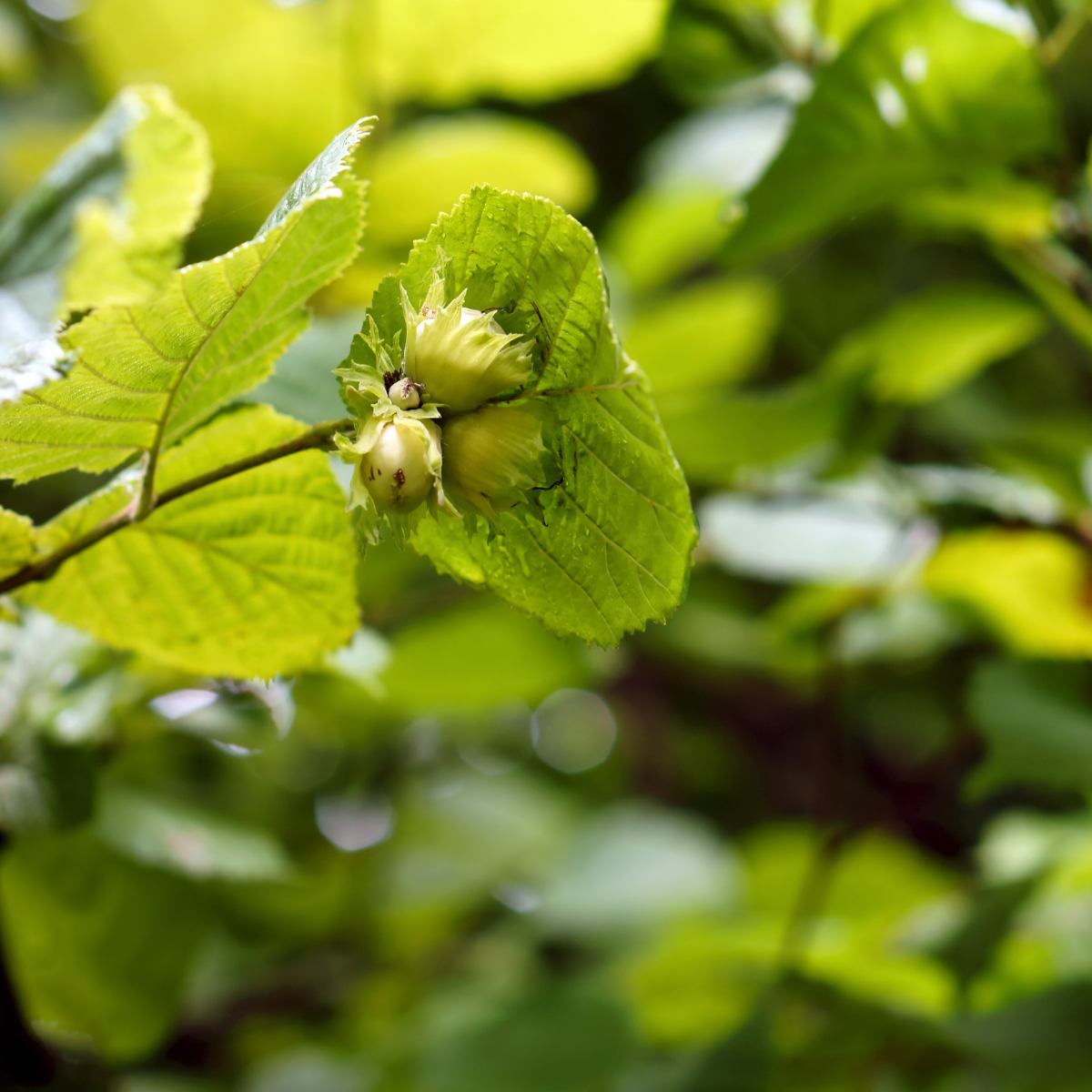

There is bamboo growing in the forest garden I volunteer at. Bamboo is something we tend to associate with speed. Some species grow extraordinarily quickly, sending new shoots upwards with an energy that can make growth seem almost visible.
Recently the bamboo has been teaching me something about slowness. Seeds were spotted while clearing the brambles around it. The bamboo had become surrounded and getting close meant working my way through them. It was fun, and productive as there were berries to harvest along the way, yummy. It was also thorny and sometimes painful. Different parts needed different tools with some parts that could simply be moved aside, others needed cutting back needing scythe but some areas needed more delicate work as brambles, the france and bamboo were all tangles. Occasionally I had to stop and work out how to get through without doing unnecessary damage.
As I worked I noticed something different at the top of the bamboo. There were unfamiliar shapes where previously there had just been leaves. The birds seemed to have noticed the change too. They had started landing amongst the bamboo. The bamboo was producing seed.
Some bamboo species have extraordinary flowering cycles, measured not in seasons or even years but in decades. A plant we associate with astonishingly rapid growth can spend much of a human lifetime before reaching the point at which it flowers and produces the possibility of another generation. And even then, the seed isn't necessarily ready.
The seeds on the forest garden bamboo are still ripening. We could harvest now, but if you take them too early they may not be fully formed and may never become viable. Having waited all this time to show themselves, they still need more time before they are capable of becoming another plant.
The speed at which the bamboo grows and can generate the potential for a new being have different rates. The speeds at which we grow have different rates. As children we grow physically rapidly, our survival depends on it. We can learn to feed ourselves, crawl, walk, run just for the fun of running, use a pencil and colour inside and outside the lines. We can grow quickly, we can learn with mind as well as physically but becoming ourselves can take a whole lifetime as some people never do.
And there are reasons for that. We are messy and part of a woven complex environment that has many tensions keeping the fabric tort. And becoming is simple but not easy.
xxxxxx
The brambles we grow
It would be easy to make the brambles the villains of one’s story: the difficult things that need clearing away before we can find our true selves underneath. And the brambles belong in the forest garden too. They provide berries and habitat and most significantly protection. They are vigorous because that is what brambles are designed to be.
Our psychological defenses can be like this. Humans, just like gardens, are amazingly adaptable and children adapt to the environments in which they find themselves. If love is available and our needs are nourished then we become easily, we ourselves and do not need to add on layers to protect. If love is unpredictable, we learn just being us is not enough and we must do something else to maintain connection. If our needs are unwelcome, we may learn not to express them. If expressing ourselves brings danger, criticism or withdrawal, we may learn to hide parts of ourselves. If the adults around us need looking after, we may become extraordinarily good at noticing what everyone else needs. We are the bamboo growth physically behind the brambles protecting ourselves while others harvest our berries and our essence can become in entangled with the thorning and sweet defenses. It is not gone but might be harder to see the full version of the bamboo.
These aren't failures. They are often intelligent responses to circumstances over which a child has very little control. Some may even bear fruit, making us develop our creativity and resilience, our abilities to sense danger or see what others need, our responsbilitie and independence.
It’s when these parts are now so dominant we can see the bamboo, or give space to ripen and harvest our seeds.
Therapy is can help us see the ourselves and create space so we’re can be grateful to our brambles and not just our defense.
When nothing seems to be happening
Plants grow at different rates and so do aspects of ourselves. Brief therapy can be enormously useful. Eight sessions may be enough to understand something differently, navigate a particular difficulty or make an important change. And there are some experiences that cannot simply be compressed into eight sessions.
A missing childhood experience, say another person being reliably present, can be understood cognitively fairly quickly and then acknowledged, even grieved, but presence and reliability has to be experienced; you can’t think it into your bodily knowing and felt sense of what it is to be in sustained relationship.
If relationships taught us that people eventually disappear, become unsafe, withdraw their affection or punish us for needing them, being told that this relationship is different isn't necessarily enough. There may need to be Tuesday after Tuesday, or Thursday after Thursday, when someone is still there. It won’t be perfect, humans are not and there will be misunderstanding, that's part of the process of making meaning between humans but it will be reliably enough.
From the outside, there may be periods when very little appears to be happening in therapy. The same things are discussed and the same patterns appear, each time around the spiral staircase looking into the experience from maybe the same angle before just a slightly different perspective. A person understands something and then apparently sees it again. Relearning can look like nothing is changing. And perhaps sometimes we are waiting for the seed to ripen.
Becoming
For me, becoming is increasingly connected with both surrender and self-responsibility.
Surrender can sound passive, as though it means accepting whatever happens to us. I mean something rather different.
There is a force and movement to life that we do not control. Life teaches us, supports us, frustrates us and nourishes us. Other people affect us. Our bodies change. Relationships begin and end. Things happen that we would never have chosen.
We cannot control all of the conditions in which we grow.
But surrender also means accepting something more challenging: that eventually we have responsibility for the life that has become ours.
We may not have planted the brambles.
We may have needed them.
We may have had very little choice about the conditions in which they first grew.
But at some point they become our brambles.
Understanding why they are there matters enormously. It can allow us to replace judgement with compassion and recognise the intelligence of the child who found a way to survive.
But understanding their origins doesn't clear them.
There is a point in becoming when we begin to move from this is what happened to me towards what am I going to do with what happened to me?
That isn't about taking responsibility for our childhoods. A child is not responsible for the neglect, abuse, control or emotional environment created by the adults around them.
It is about recognising that as adults we gradually acquire choices that weren't available to us then.
We can ask for help. We can learn to recognise our needs. We can decide which relationships we remain in. We can notice the old response beginning and sometimes choose another. We can care for our bodies. We can say yes and no. We can make mistakes and take responsibility for repairing them.
We can tend the ground we have inherited.
Perhaps this is part of what psychological adulthood means.
Not independence from everything that shaped us, and not complete mastery of ourselves, but an increasing willingness to take responsibility for how we meet the life that is here.
And paradoxically, that responsibility includes accepting what we cannot force.
Still ripening
The bamboo seeds are still there.
For the moment there isn't much for me to do.
I can keep an eye on them. I can tend the forest garden around them. I can notice the birds arriving and the small changes that tell me something is happening.
But I can't make the seeds ripen faster.
If I harvest them because I am ready for them to be ready, I may destroy the very possibility I have been waiting for.
There is something humbling about that.
Therapy also asks us to learn when to act and when to wait. When to clear something away and when to understand why it is there. When an old defence has become an excuse not to change, and when something genuinely needs more time.
Perhaps that is part of surrender too.
We take responsibility for tending ourselves while relinquishing the idea that we can control every part of our becoming.
Some parts of us can grow astonishingly quickly. Other parts may take years before they are ready to flower. Something can be visible before it is viable. Something can be changing long before the change can be seen.
The bamboo has spent years growing amongst the brambles. Now, extraordinarily, there are seeds.
They are not ready yet.
So I will leave them where they are.
Perhaps becoming fully ourselves is partly about learning to do the same: to clear what needs clearing, care for what needs caring for, take responsibility for the ground that is ours — and surrender enough to allow some things to ripen in their own time.
—------
We can understand something cognitively long before we know it in our bodies. We can know that something which happened to us as a child was neglectful, controlling or abusive, and yet still carry within us the adaptations we developed in order to survive it.
A person can say, quite truthfully, "I know I don't have to do this anymore", while some other part of them remains organised around the belief that they do.
This can be frustrating.
Sometimes people come to therapy already knowing a great deal about themselves. They have read, reflected and understood their histories. They can identify their patterns and sometimes even explain where those patterns came from.
And yet they continue to find themselves doing the same things.
Understanding matters. But understanding and ripening are not quite the same thing.
Some things seem to require not simply insight, but experience repeated over time. They need to be known cognitively, emotionally and bodily before something new becomes possible.
A seed can be visible and still not be viable.
Sometimes people come to therapy already knowing a great deal about themselves. They have read, reflected and understood their histories. They can identify their patterns and sometimes even explain where those patterns came from.
And yet they continue to find themselves doing the same things.
Understanding matters. But understanding and ripening are not quite the same thing.
Some things seem to require not simply insight, but experience repeated over time. They need to be known cognitively, emotionally and bodily before something new becomes possible.
A seed can be visible and still not be viable.